
Why is it so difficult to go to your church with the struggles of your soul? What does it look like practically for a believer to seek help from their church? How does a pastor respond? Tragically, we have seen a trend that many Christians aren’t even going to the church or God’s word for help. When they do, many pastors feel discouraged and unequipped to respond and they send their flock to licensed therapists hoping that they will offer something to heal the hurting soul. We wanted to give you a tangible example of what it looks like for a believer to seek help from their pastor in a church that has a strong culture of biblical care and counsel.
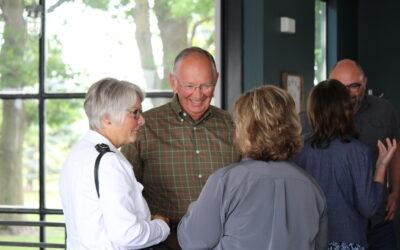
In this episode, we share a real testimony of the mighty act of God through the power of the Holy Spirit through the wisdom of the Word using a competent, confident counselor. Pastor Jarrod Bartholomew, the lead pastor of Pontiac Bible Church, and Renee Leger, the children’s ministry director, share a story of God’s power and God’s grace.
In this episode, we discuss the hardship of sin, the beauty and freedom of confession, the joyous restoration that can happen in a strong church body of believers who are living in God’s grace, and more!
We pray that through this episode you will be encouraged and a little more equipped to counsel your flock with conviction and hope.
Listen in!
RESOURCES:
- Check out Pontiac Bible Church
- Learn more about our 5-Project Biblical Counseling Blueprint Model™
- Explore the rest of our website – bcmnational.org
- Read our Articles
- Follow us on Instagram
- Donate to support BCM
KEY TAKEAWAYS:
- It is God’s word that will transform the heart of the counselee, not your ability as a counselor. Hebrews 4:12 “For the word of God is living and active, sharper than any two-edged sword, piercing to the division of soul and of spirit, of joints and of marrow, and discerning the thoughts and intentions of the heart.” The same God that redeemed this sinner’s stubborn heart has been faithful to sanctify them throughout their life and He will continue His good work through the Holy Spirit. Take heart when your counselee seems unmovable. If Christ is in them, He will bring about their repentance.
- We are all equal at the foot of the cross. There are no pedestals. This encourages a culture of confession and reconciliation, and believers will be more willing to admit their need for help. All of our help comes from the Lord, the maker of heaven and earth. You’re not only a pastor, biblical counselor, or church leader discipling another believer. You are primarily a sinner who is fully dependent on God’s daily grace and is a constant recipient of the forgiveness of others.
- Confession is a gift to a believer. The ongoing journey of sanctification includes an ongoing practice of confession. While there is appropriate godly sorrow that leads to this repentance, there is no shame for the believer- no condemnation before God or fellow man for repenting of sin. Ps 32:5 “I acknowledged my sin to you, and I did not cover my iniquity; I said, ‘I will confess my transgressions to the Lord,’ and you forgave the iniquity of my sin.” There is so much joy knowing that believers have the opportunity to confess sin before a holy God and because of His son Jesus Christ, those things are forgiven!

Jarrod Bartholomew
Lead Pastor at Pontiac Bible Church

Renee Leger
Children’s Ministry Director at Pontiac Bible Church